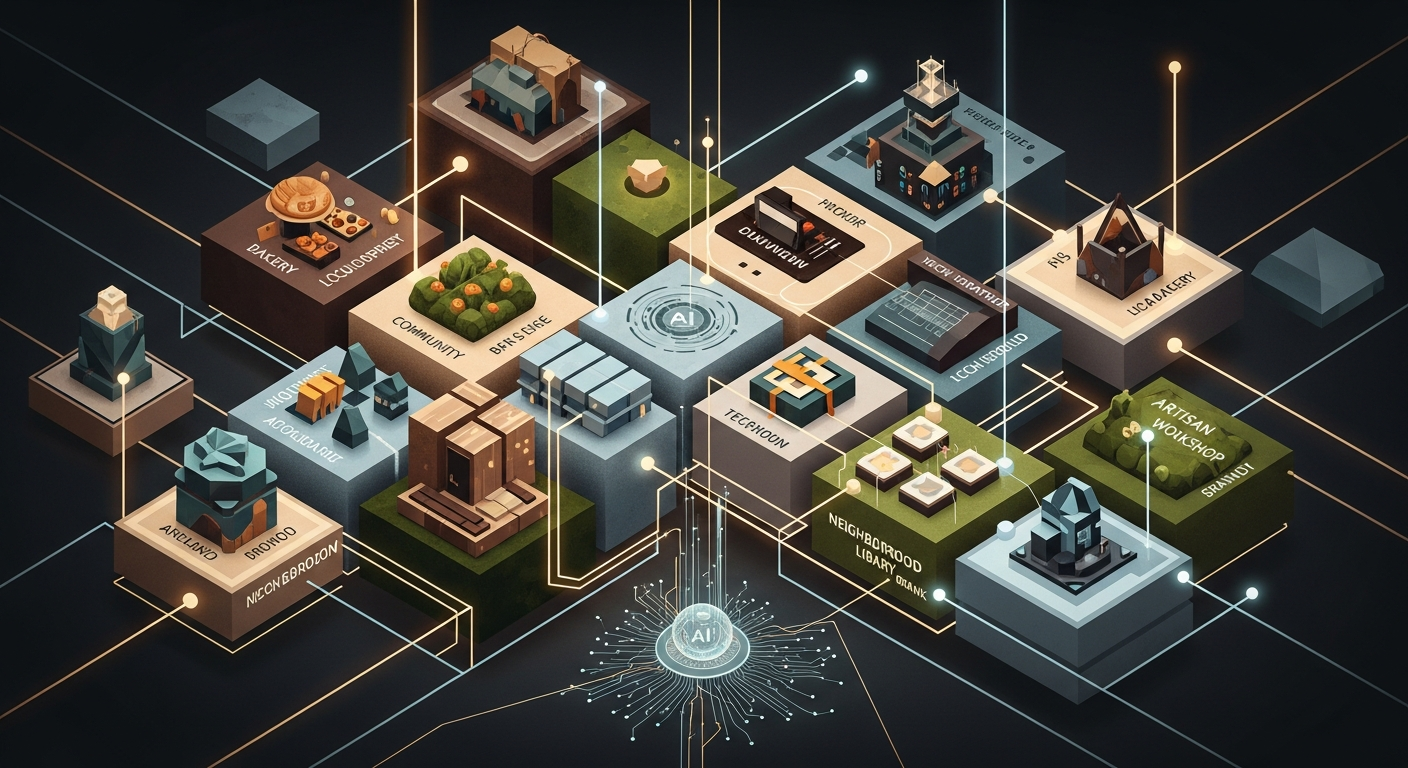
In an increasingly interconnected yet volatile world, global shocks – from pandemics to supply chain disruptions and climate events – underscore the critical need for resilience, not just at a national or corporate level, but deep within our communities. While AI is often discussed in terms of global impact or enterprise-wide transformation, its profound potential to foster hyper-local economic resilience remains an emerging frontier. This is where AI acts as an architect, meticulously building stronger, more adaptive ecosystems for communities and the micro-enterprises that form their very backbone.
For senior marketers, business leaders, and tech strategists, understanding this localized application of AI is paramount. It's about moving beyond aggregated national data to grasp the unique pulsions, demands, and vulnerabilities of specific neighborhoods, towns, and regions. By doing so, we unlock new avenues for growth, sustainable development, and genuine community empowerment.
Understanding Hyper-Local Economic Resilience
Hyper-local economic resilience refers to the capacity of local economies to withstand shocks, adapt to change, and thrive by leveraging their inherent strengths and resources. Traditionally, this has been an arduous task, hampered by fragmented data, limited resources for in-depth analysis, and an inability to predict granular shifts in supply and demand. Local businesses often operate with imperfect information, making strategic planning and rapid adaptation challenging.
AI offers a powerful solution, transforming raw, disparate data into actionable intelligence that can strengthen the fabric of local economies from the ground up.
AI's Role in Granular Data Synthesis and Predictive Insights
The first critical step in building hyper-local resilience is to gather and make sense of localized data. AI excels here, acting as a sophisticated digital ethnographer. It can aggregate diverse data points that define a local economy: foot traffic patterns, local sales data, social media sentiment, public transport usage, energy consumption, local job market trends, climate data, and even anonymized transactional information from small businesses. Through advanced machine learning algorithms, AI can identify subtle patterns, predict shifts in local demand, pinpoint supply chain vulnerabilities specific to a region, and even forecast public health needs.
- Resource Mapping & Optimization: AI can map local resources – from available skilled labor to local food producers or renewable energy sources – and identify optimal ways to allocate or leverage them, minimizing waste and maximizing local circularity.
- Dynamic Needs Assessment: By continuously analyzing real-time local data, AI provides predictive insights into community needs, allowing local services (e.g., healthcare, education, public safety) to be proactively adapted.
Empowering Micro-Enterprises with AI
Micro-enterprises – the independent shops, local service providers, artisans, and startups – are the lifeblood of any local economy, yet often lack the resources for sophisticated market analysis or personalized outreach. AI democratizes these capabilities:
- AI-Driven Local Market Research: Small businesses can access AI tools to understand local consumer trends, identify underserved niches, analyze local competitor strategies, and predict optimal pricing based on real-time local data.
- Personalized Local Marketing: AI enables hyper-targeted marketing campaigns, connecting micro-enterprises with local customers through personalized offers, content, and messaging based on their actual behaviors and preferences within that specific geographic area.
- Operational Optimization: From predicting optimal inventory levels for a local grocery store to optimizing staffing schedules for a small café based on predicted foot traffic and weather, AI can streamline operations, reduce waste, and improve profitability for even the smallest businesses.
Building Smart Communities and Adaptive Infrastructure
Beyond individual businesses, AI is pivotal in shaping the very environment in which they operate. For community leaders and urban planners, AI becomes an indispensable tool for creating smart, adaptive infrastructure and services:
- Optimized Urban Planning: AI can simulate the impact of new developments, traffic flow changes, or public space designs, helping planners make data-driven decisions that enhance livability and economic activity, including optimizing transport, energy grids, and planning for sustainable growth.
- Predictive Public Services: Leveraging AI, local governments can predict spikes in demand for public services like waste management or emergency response, allowing for proactive resource deployment and improved citizen satisfaction.
- Community Feedback Loops: AI-powered platforms can analyze citizen feedback from multiple channels, identifying key concerns and sentiments, helping local authorities respond more effectively and build trust.
Strategic Implications for Leaders and Marketers
For Business Leaders:
Embracing hyper-local AI is a strategic imperative for future growth and societal contribution. Leaders should:
- Invest in Local Data Infrastructure: Prioritize building robust systems for collecting, analyzing, and securely managing hyper-local data.
- Foster Ecosystems: Contribute to, and benefit from, a thriving local economy powered by AI, by supporting local AI startups or sharing anonymized data for collective benefit.
- Identify New Market Opportunities: Leverage AI-driven local insights to discover unmet needs or emerging trends in specific geographic areas, leading to highly tailored innovations.
For Marketers:
The shift to hyper-local AI redefines engagement and authenticity. Marketers must:
- Master Hyper-Localized Content: Develop content strategies that resonate deeply with specific local audiences, reflecting their unique culture, events, and concerns, informed by AI insights.
- Leverage Geo-Targeted AI: Utilize AI tools for sophisticated geo-targeting in advertising, delivering messages that are not just location-aware but contextually relevant to the immediate environment.
- Build Authentic Community Engagement: Use AI to identify key local influencers, community groups, and events to participate in, fostering genuine relationships rather than generic outreach.