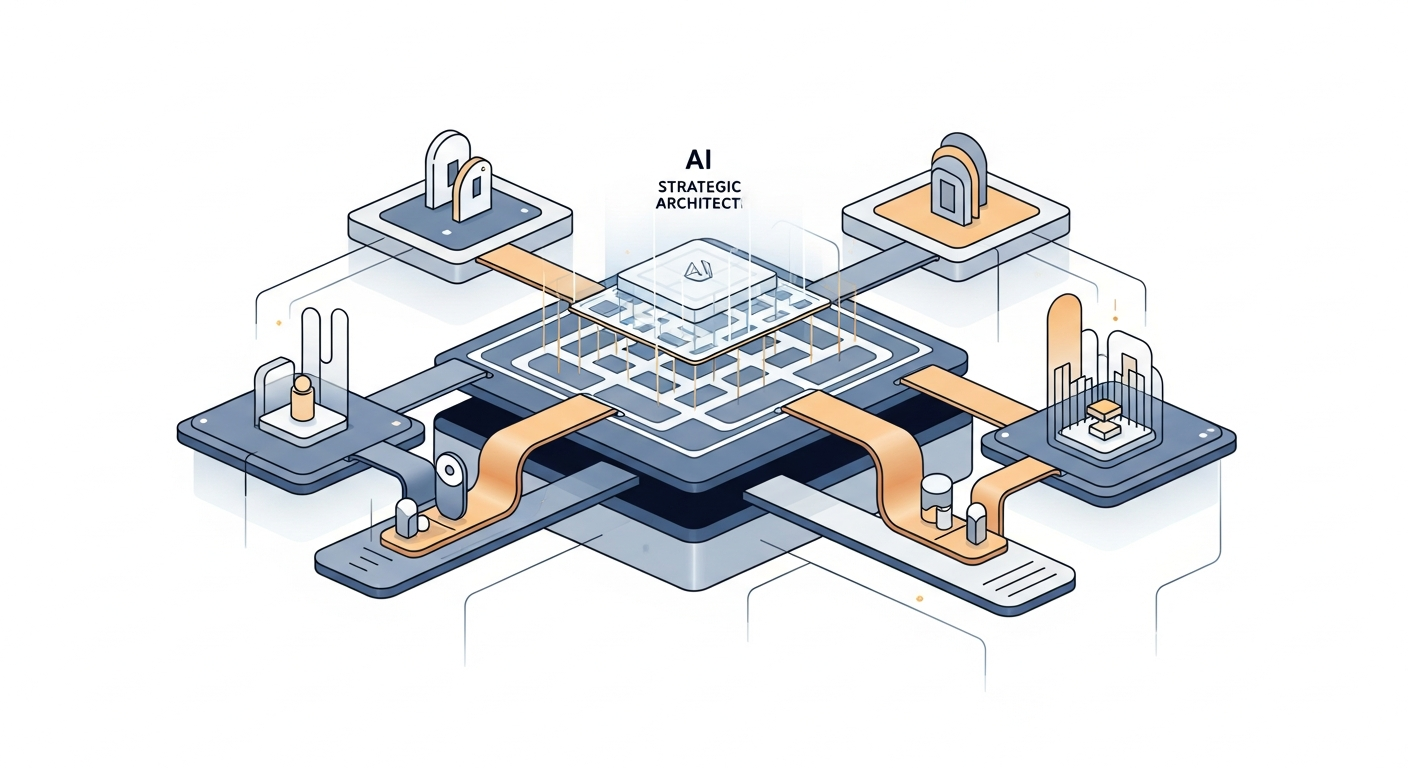
Introduction: Beyond Automation – AI as a Strategic HR Partner
The narrative around Artificial Intelligence often centers on automation, efficiency gains, and cost reduction. While these are undeniable benefits, they represent only a fraction of AI's transformative potential, particularly when it comes to an enterprise's most critical asset: its people. For senior marketers, business leaders, and tech strategists, the true frontier of AI lies in its capacity to act as a strategic architect for the future workforce – not just automating tasks, but fundamentally reshaping talent acquisition, skill development, and organizational design.
In an era defined by rapid technological shifts and evolving market demands, the ability to anticipate and adapt your human capital strategy is paramount. AI offers unprecedented capabilities to move beyond reactive HR functions to proactive, data-driven workforce planning. This involves leveraging advanced analytics and machine learning to understand current capabilities, predict future skill requirements, identify talent gaps, and even design more resilient and agile organizational structures. Beyond this, AI is also transforming broader digital communication for modern businesses, enabling enterprises to create smarter, more scalable content ecosystems.
Identifying Future Skills and Gaps: AI's Predictive Power
One of the most pressing challenges for modern enterprises is the accelerating pace at which essential skills become obsolete and new ones emerge. Traditional methods of skills assessment and forecasting often lag behind real-world demands, leaving organizations scrambling. AI, however, can transform this landscape through sophisticated predictive analytics.
By analyzing vast datasets – including industry trends, job market demands, internal project success metrics, employee performance data, and even external research papers – AI algorithms can identify emerging skill clusters and pinpoint potential future talent deficits long before they become critical. This foresight allows leaders to not only understand the skills required for future success but also to quantify the gap between their current workforce capabilities and their strategic ambitions. AI can also help identify adjacent skills that employees can leverage or develop, creating personalized pathways for growth and redeployment.
Actionable Insight:
- Implement an AI-powered skills inventory system: Move beyond static job descriptions to dynamic skill profiles that are continuously updated and analyzed for future relevance.
- Leverage AI for predictive talent mapping: Use AI to forecast skill demand based on strategic objectives, market shifts, and technological advancements, then map existing talent against these predictions.
- Partner with data scientists: Collaborate to build models that identify leading indicators of skill obsolescence and emergence within your industry.
Personalized Learning & Development: Crafting a Resilient Workforce
Once skill gaps are identified, the next challenge is bridging them effectively and at scale. Here, AI's capacity for hyper-personalization becomes a game-changer for learning and development (L&D). Rather than one-size-fits-all training programs, AI can curate individualized learning paths tailored to each employee's existing skills, learning style, career aspirations, and the organization's strategic needs.
AI-driven platforms can recommend specific courses, modules, mentors, or experiential learning opportunities. They can track progress, adapt content based on performance, and even provide real-time feedback, ensuring that employees acquire the most relevant skills efficiently. This not only makes L&D more engaging and effective but also significantly boosts workforce resilience by fostering a culture of continuous learning and adaptability. For marketers, this means employees are better equipped to leverage new AI tools, understand complex data, and adapt to evolving customer journeys.
Practical Steps:
- Invest in AI-driven L&D platforms: Explore solutions that offer adaptive learning paths and personalized content recommendations.
- Integrate skill assessment with learning systems: Ensure that identified skill gaps automatically trigger relevant training recommendations.
- Promote a culture of self-directed learning: Empower employees with AI tools that make skill development accessible and personally relevant.
Dynamic Organizational Structures: Agility Through AI-Driven Design
The traditional hierarchical organizational structure, designed for stability, often struggles in today's volatile business environment. AI is now enabling a shift towards more dynamic, agile, and fluid organizational designs. By analyzing communication patterns, project interdependencies, team performance, and individual contributions, AI can reveal optimal team configurations, identify bottlenecks in workflows, and even suggest re-allocations of resources to maximize agility and responsiveness.
This isn't about eliminating human oversight but rather empowering leaders with data-driven insights to make informed decisions about team formation, project staffing, and even the efficacy of different departmental structures. Imagine an AI that can simulate the impact of reorganizing teams on project timelines or identify optimal cross-functional collaborations to accelerate innovation. This leads to an enterprise that can adapt its internal structure as rapidly as market conditions change, optimizing for both efficiency and innovation.
Strategic Considerations:
- Explore AI tools for organizational network analysis: Understand how information flows and identify key influencers and potential silos.
- Pilot AI-assisted project team formation: Use AI to match skills and personalities for optimal team dynamics on critical initiatives.
- Re-evaluate rigid hierarchies: Consider how AI insights can support more fluid, project-based or matrixed organizational models.
The AI-Human Collaboration Blueprint: Optimizing Roles and Synergies
Ultimately, the future workforce is not about replacing humans with AI, but about optimizing the synergy between them. AI's role as an architect extends to designing this collaboration blueprint. This involves identifying tasks best suited for automation, augmenting human capabilities where AI can add value, and creating entirely new roles that focus on AI oversight, ethical deployment, and strategic interpretation of AI-generated insights.
For senior marketers, this means understanding how AI content repurposing can free up creative teams from repetitive tasks, enabling them to focus on higher-level strategy, empathy-driven content, and innovative campaign design. For business leaders, it means consciously designing job roles that leverage human strengths – critical thinking, emotional intelligence, creativity – while offloading data crunching and routine analysis to AI. This strategic workforce planning ensures that human talent is directed towards high-impact activities, driving greater overall enterprise value.
Key Takeaways for Leaders:
- Conduct an AI-readiness assessment: Evaluate which roles and tasks are ripe for AI augmentation or automation, and which require enhanced human skills.
- Design hybrid roles: Create new positions that explicitly manage AI systems, interpret their outputs, and ensure ethical guidelines are met.
- Prioritize human-centric skills: Foster creativity, critical thinking, emotional intelligence, and collaboration as indispensable human contributions alongside AI.