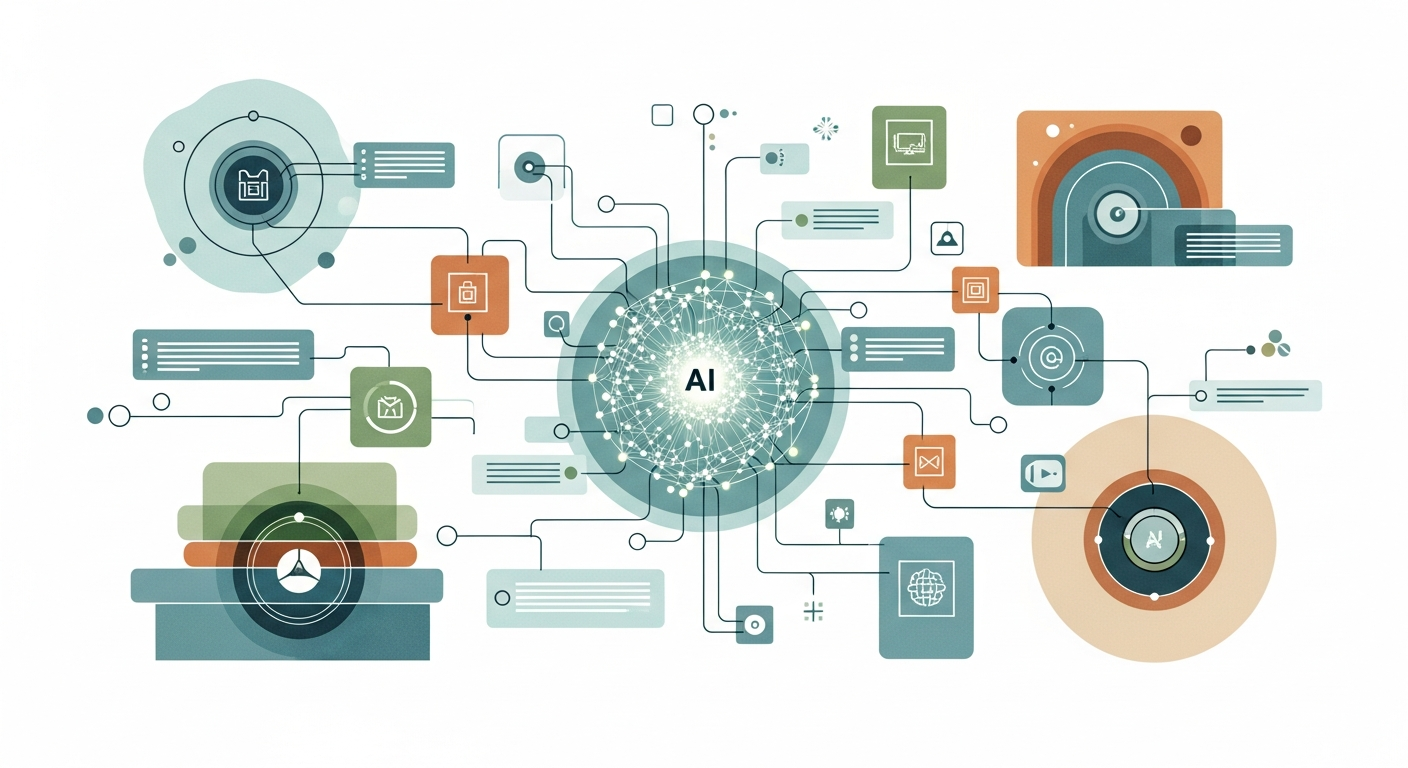
The concept of a digital twin – a virtual replica of a physical object, process, or system – has revolutionized how enterprises monitor and manage assets. Yet, the true zenith of this technology emerges not from isolated twins, but from the orchestration of interconnected digital twin ecosystems, supercharged by artificial intelligence. For senior marketers, business leaders, and tech strategists, this represents a paradigm shift: moving beyond reactive management to proactive, predictive advantage across the entire organizational landscape. DigiIQ explores how AI is transforming individual digital replicas into a dynamic network of intelligence, enabling unprecedented operational agility, strategic foresight, and sustainable innovation.
The Quantum Leap: From Single Twins to Integrated Ecosystems
While a single digital twin provides invaluable insights into one asset, process, or product, its power multiplies exponentially when integrated into a cohesive ecosystem. Imagine not just a digital twin of a manufacturing robot, but a twin of the entire production line, the supply chain feeding it, and even the customer demand forecasting system. AI acts as the central nervous system for these ecosystems, constantly synthesizing data from myriad sources – IoT sensors, historical logs, market trends, even geopolitical data – to create a holistic, real-time operational replica. This integration allows for cross-domain analysis, uncovering interdependencies and emergent patterns that would be invisible in siloed systems, providing a comprehensive, always-on diagnostic and predictive capability.
Actionable Takeaway:
- Begin by identifying critical interdependencies within your value chain where integrating existing or new digital twins could unlock compounding insights. Prioritize pilots that connect distinct operational areas to demonstrate the power of an ecosystem approach.
Orchestrating Predictive Operational Excellence
AI-powered digital twin ecosystems are the ultimate tools for predictive operational excellence. For manufacturing, this means moving beyond simple predictive maintenance for individual machines to anticipating bottlenecks across an entire factory floor, optimizing energy consumption in real-time based on production schedules, and even simulating the impact of new product designs on throughput before physical prototypes exist. In logistics, an ecosystem of twins could model entire supply networks, predicting disruptions from weather events to geopolitical shifts, and autonomously re-routing shipments for optimal efficiency and resilience. The ability to run complex 'what-if' scenarios within these living simulations allows leaders to test strategies, mitigate risks, and optimize resource allocation with unparalleled precision, reducing waste and boosting efficiency across the board.
Actionable Takeaway:
- Map your core operational processes and identify points where real-time simulation and predictive analytics could dramatically improve efficiency or reduce downtime. Invest in AI models capable of processing multivariate data streams from your digital twins to generate actionable forecasts.
Reimagining Customer Experiences and Product Innovation
The impact of digital twin ecosystems extends far beyond internal operations to redefine customer engagement and product development. Imagine creating a digital twin of a customer journey, not just based on historical data, but integrating real-time behavioral patterns, demographic shifts, and market sentiment. AI can then simulate the impact of new marketing campaigns, product features, or service interventions, predicting customer responses and optimizing strategies before deployment. For product development, an ecosystem allows for the virtual prototyping, testing, and iteration of products in various simulated environments, accelerating time-to-market and ensuring higher quality and relevance. This approach ensures that every innovation is customer-centric and deeply validated.
Actionable Takeaway:
- Develop digital twins of your key customer segments or product lifecycles. Utilize AI to run simulations predicting the efficacy of new marketing initiatives or product enhancements, allowing for rapid, data-driven iteration and personalization.
Strategic Foresight and Resilient Decision-Making
For senior business leaders, AI-driven digital twin ecosystems offer an unparalleled platform for strategic foresight and resilient decision-making. These sophisticated replicas can model complex interactions between market dynamics, regulatory changes, competitive actions, and internal capabilities. By feeding external data streams – economic indicators, policy changes, competitor announcements – into the ecosystem, AI can identify potential threats and opportunities, simulating their cascading effects across the organization. This allows leaders to move from reactive crisis management to proactive strategic planning, exploring multiple future scenarios, assessing investment risks, and identifying optimal pathways for growth and sustainability. It transforms strategy from a static plan into a dynamic, adaptive capability.
Actionable Takeaway:
- Integrate external data sources relevant to your market and regulatory environment into your digital twin ecosystem. Leverage AI to build predictive models that forecast the impact of macro-trends on your business, enabling more robust strategic planning and contingency development.
Building Your AI-Powered Digital Twin Ecosystem: A Strategic Roadmap
Implementing an AI-powered digital twin ecosystem is a strategic journey, not a singular project. It begins with a clear understanding of your business objectives and identifying high-impact areas for initial deployment. Start small with a well-defined pilot that connects two or three critical operational areas, demonstrating tangible ROI. A robust data infrastructure capable of ingesting, processing, and analyzing diverse data streams in real-time is paramount. Cultivate a cross-functional team with expertise in IoT, AI/ML, cloud computing, and domain-specific knowledge. Focus on modularity and interoperability, selecting platforms and technologies that can scale and integrate seamlessly. Iterative development, continuous learning, and fostering an organizational culture that embraces data-driven insights are key to realizing the full, transformative potential of these intelligent replicas. This evolution towards interconnected, AI-augmented digital twins represents the next frontier of operational intelligence, offering a future where foresight and adaptability become intrinsic to business success.
Actionable Takeaway:
- Develop a phased implementation strategy, starting with a manageable proof-of-concept. Prioritize building a scalable data foundation and investing in training for your teams to bridge the gap between AI capabilities and business applications. Partner with technology providers experienced in digital twin and AI integration, such as those offering scalable AI content solutions that empower agile and responsive strategies across your enterprise.