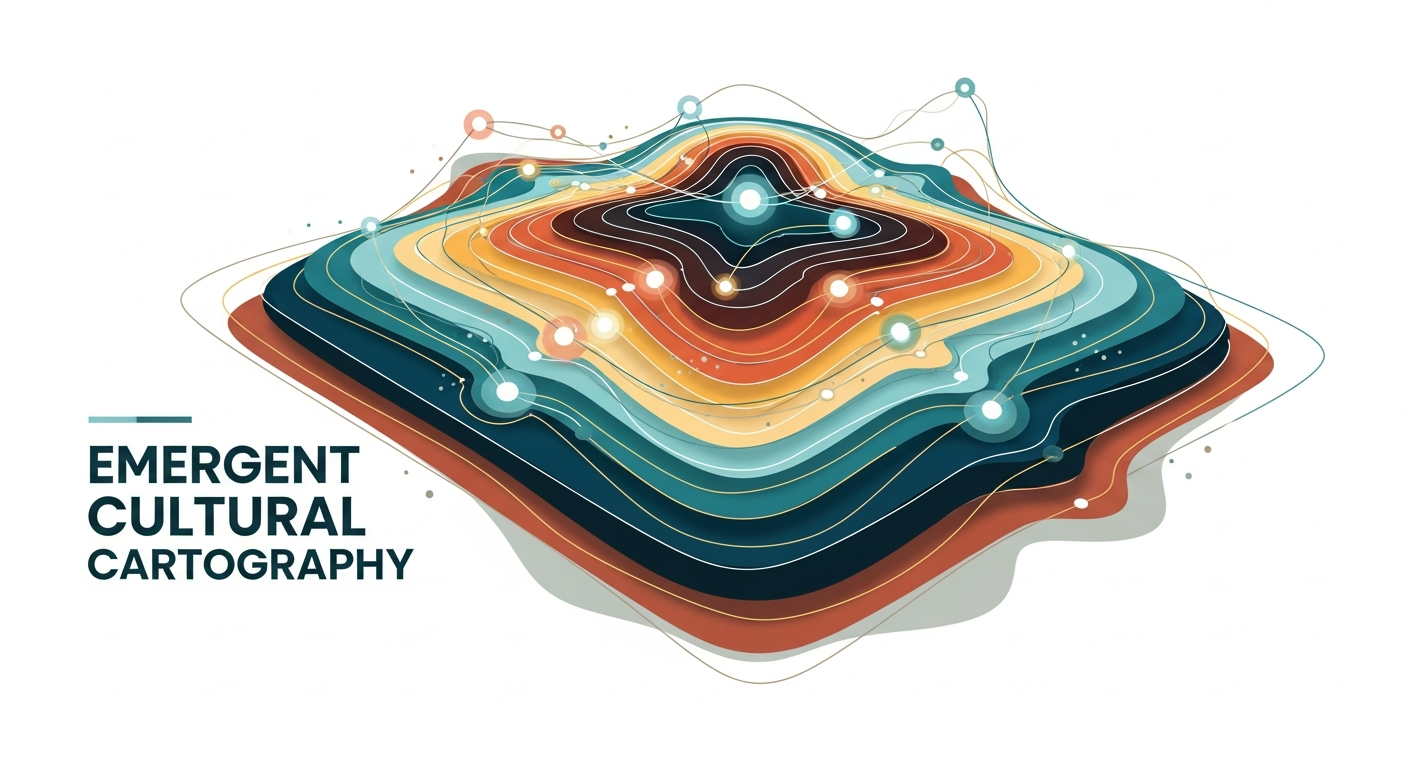
In an era defined by accelerating change and hyper-connectivity, the ability to anticipate and interpret nascent cultural shifts is no longer a luxury but a strategic imperative. For senior marketers and business leaders, understanding the subtle tremors that precede major societal transformations is crucial for maintaining relevance, fostering innovation, and securing competitive advantage. Traditional market research methods often lag behind the curve, providing snapshots of the present rather than foresight into the future. They frequently rely on historical data or explicit survey responses, missing the organic, often subconscious evolution of collective sentiment. This is where AI-driven Emergent Cultural Cartography steps in, offering a revolutionary and proactive approach to mapping the unseen dimensions of our collective consciousness and predicting tomorrow's defining trends with remarkable precision.
Beyond Big Data: The Nuance of Cultural Synthesis
While conventional big data analytics excels at identifying patterns in established, often quantitative datasets, emergent cultural cartography leverages advanced AI to delve into unstructured, qualitative signals that hint at shifts before they become mainstream. This isn't merely about tracking trending hashtags or superficial keyword analysis; it's about synthesizing profound meaning from vast, disparate sources. Imagine AI sifting through the nuanced language of fringe online communities, the philosophical undertones of academic papers, the emotional resonance of artistic expressions, and the candid feedback from open-ended surveys. Advanced AI algorithms, particularly those specialized in natural language processing (NLP) and computer vision, can identify subtle linguistic shifts, recurring visual motifs, and nascent narratives that signal deeper changes in underlying values, aspirations, and anxieties across diverse populations. This capability moves beyond simply knowing what is happening to understanding why it's emerging and where it's headed.
This advanced synthesis allows organizations to move beyond reactive trend-spotting to proactive trend-shaping. Instead of simply observing a trend as it peaks, businesses can detect its genesis, understand its underlying drivers, and even strategically contribute to its evolution. This transforms market understanding from a rearview mirror exercise into a sophisticated, forward-looking navigational tool, empowering leaders to position their brands, products, and services with unprecedented precision and cultural relevance.
The Mechanics of Predictive Cultural Cartography
The operationalization of Emergent Cultural Cartography involves sophisticated AI models working in concert to create a holistic, dynamic view of the cultural landscape. Key components include:
- Advanced Natural Language Processing (NLP): Going beyond basic sentiment analysis, these models identify intricate semantic networks, subtle topic clusters, and latent conceptual associations within vast text corpuses—from real-time social media and forums to academic research and creative writing. They detect minute shifts in language usage and narrative frameworks.
- Computer Vision and Multimodal AI: AI systems analyze vast amounts of visual content—images, videos, artistic works—to identify emerging aesthetic trends, symbolic meanings, and visual narratives. Combining this with NLP offers a richer, contextual understanding of cultural expressions.
- Network Analysis and Graph Databases: AI maps intricate relationships between ideas, influential individuals, and disparate communities. This identifies spread patterns and critical nodes, helping pinpoint early adopters and potential tipping points for broader societal adoption.
- Temporal Pattern Recognition and Predictive Modeling: Machine learning models detect subtle, longitudinal shifts in these qualitative and quantitative signals, identifying precursors to major trends and predicting their potential trajectory and impact.
By integrating these multi-faceted AI capabilities, businesses gain a dynamic dashboard of cultural indicators, offering a living, breathing map of the evolving societal landscape rather than static, outdated reports.
Strategic Imperatives for Business Leaders
For senior business leaders, leveraging AI for emergent cultural cartography translates directly into unparalleled strategic advantage and resilient organizational planning:
- Future-Proofing Strategy: Anticipate profound paradigm shifts in consumer values, socio-economic expectations, and workforce priorities, enabling proactive adjustments to long-term business models and investment portfolios.
- Disruptive Innovation: Identify deep-seated, unmet needs and nascent desires before they become explicitly articulated, fueling truly disruptive product and service innovations that resonate deeply with future consumers.
- Proactive Risk Mitigation: Detect potential shifts in social sentiment or ethical concerns that could rapidly escalate into significant reputational risks or stringent regulatory scrutiny, enabling proactive communications and policy adjustments.
- Optimized Talent Acquisition: Understand the evolving cultural values among future employees, allowing for the development of attractive employer brands and inclusive workplace cultures that authentically align with broader societal aspirations.
This deep strategic foresight empowers leaders to move beyond merely reacting to the market to actively shaping it, positioning their organizations as cultural frontrunners and responsible innovators.
Actionable Playbook for Marketers
Marketers stand to gain immensely from this advanced AI capability, fundamentally transforming their approach to campaigns, brand building, and customer engagement:
- Hyper-Relevant Messaging & Narrative: Craft campaigns and brand narratives that authentically tap into nascent cultural anxieties or emerging aspirations, ensuring messages resonate on a deeper, more personal level. Identify the precise language and visual metaphors that will speak most powerfully to tomorrow's discerning consumers.
- Early Adopter & Influencer Identification: Pinpoint specific communities, thought leaders, and micro-influencers who are early adopters or shapers of emergent trends. This enables highly targeted, authentic, and effective seeding strategies.
- New Market & Niche Discovery: Uncover entirely new market segments or niche opportunities based on evolving cultural identities and previously unarticulated needs, allowing for tailored product and service development.
- Dynamic Brand Storytelling & Values Alignment: Evolve brand narratives proactively to remain authentic, culturally aligned, and demonstrably purpose-driven, avoiding the significant pitfalls of outdated messaging or perceived corporate insensitivity.
- Optimized Content Strategy: Inform content creation with continuous insights into emerging topics of interest, preferred formats, and influential digital platforms, ensuring content remains fresh, engaging, and authoritative.
With AI-powered cultural insights, marketers can transcend traditional demographic segmentation, connecting with audiences based on shared emergent values, evolving worldviews, and collective aspirations, forging deeper, more meaningful brand-consumer relationships.
Ethical Considerations and the Human Element
While the transformative power of AI in cultural cartography is immense, its implementation demands careful ethical consideration and responsible governance. The potential for algorithmic bias, over-generalization leading to misinterpretation, or even the weaponization of cultural insights for manipulative purposes is a real and significant concern. Organizations must prioritize transparency in data sourcing and AI model training, rigorously safeguard data privacy, and ensure robust human oversight remains paramount throughout the entire process.
AI should serve as an invaluable augmentation, not a replacement, for profound human intuition, empathy, and critical thinking. The most effective strategies will always combine AI's unparalleled data processing, pattern recognition, and predictive capabilities with the nuanced understanding, ethical judgment, and creative interpretation of seasoned human strategists, cultural experts, and business leaders. The ultimate goal is to inform and profoundly enhance human decision-making, allowing leaders to navigate complex cultural currents with greater wisdom, foresight, and social responsibility.