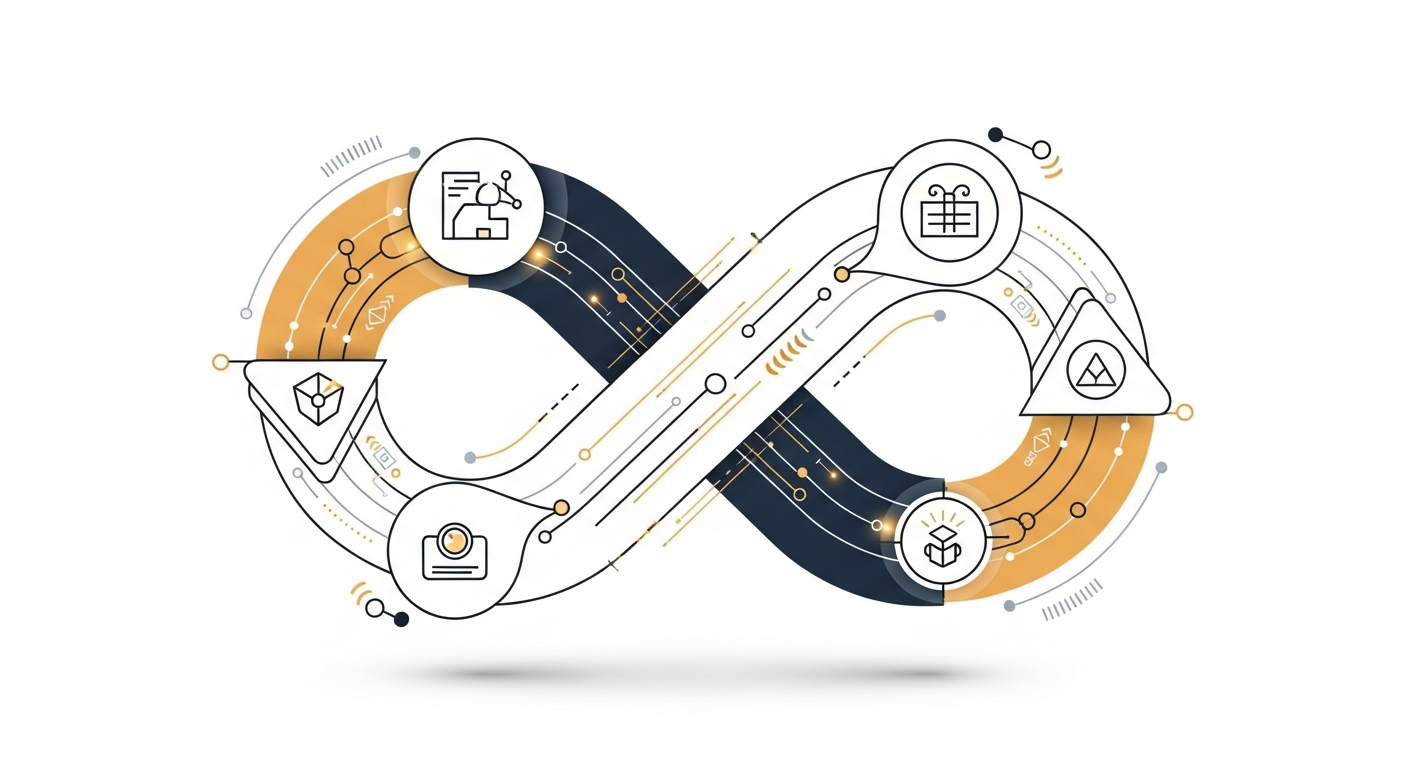
In today's hyper-competitive and rapidly evolving markets, the success of a product hinges not just on its initial brilliance, but on its entire journey from an abstract idea to a beloved, long-lasting solution. Traditional product lifecycle management often operates in silos, leading to slower innovation, increased costs, and missed market opportunities. However, a new paradigm is emerging: AI for Product Lifecycle Intelligence (PLI). This transformative approach integrates advanced artificial intelligence capabilities across every stage of a product's life, empowering senior marketers, business leaders, and tech strategists to innovate with unprecedented speed, precision, and customer centricity.
AI-driven PLI is about creating a living, breathing intelligence layer that continuously learns, adapts, and optimizes products. It moves beyond isolated AI applications to weave AI into the very fabric of product conception, design, development, launch, and post-market evolution. The objective is clear: to ensure products are not only relevant upon release but remain superior and adaptable throughout their market tenure, driving sustainable growth and deeper customer loyalty.
AI in Concept & Design: The Genesis of Smart Products
The journey of a product begins with an idea, but AI can supercharge this initial phase with data-driven insights and generative capabilities. By analyzing vast datasets—including market trends, consumer sentiment, competitor products, and technological advancements—AI can identify unmet needs, predict future demand, and even uncover latent opportunities that human teams might overlook. Technologies like Generative AI Development are now enabling designers to rapidly prototype countless iterations, exploring design possibilities and material combinations far beyond human capacity. This accelerates the conceptualization phase, ensuring that the products moving to development are inherently innovative and market-aligned.
Actionable Takeaway for Business Leaders: Integrate AI-powered market analysis tools and generative design platforms into your R&D and design departments. Encourage cross-functional teams to use AI for rapid ideation and validation of product concepts against real-time market data, ensuring a stronger product-market fit from day one.
AI in Development & Validation: Building with Precision
Once a concept is solidified, AI continues to play a pivotal role in streamlining the development process. In software development, AI tools can assist engineers in LLM Development and code generation, predictive bug detection, and automated testing, drastically reducing development cycles and improving code quality. For physical products, AI can simulate manufacturing processes, predict material fatigue, and optimize assembly lines, identifying potential flaws or inefficiencies long before physical production begins. The use of synthetic data for testing allows for rigorous validation in secure, privacy-preserving environments, accelerating quality assurance without compromising sensitive real-world data.
Actionable Takeaway for Tech Strategists: Implement AI-driven development tools and testing frameworks that leverage predictive analytics for quality assurance. Explore how synthetic data can create robust testing environments, allowing your teams to iterate faster and deliver higher-quality products with fewer post-launch issues.
AI in Launch & Market Engagement: Connecting with Impact
The product launch is a critical moment, and AI provides the intelligence needed to maximize its impact. Senior marketers can leverage AI to create hyper-personalized marketing campaigns, dynamically tailoring messages, visuals, and offers to individual customer segments in real-time. AI-powered recommendation platforms can suggest relevant products based on browsing behavior and purchase history, driving higher conversion rates. Furthermore, AI can provide predictive analysis on market response and demand forecasting, allowing businesses to optimize inventory, pricing, and distribution strategies for peak performance. This intelligent engagement ensures that the product resonates with the right audience at the right time.
Actionable Takeaway for Senior Marketers: Deploy AI tools for dynamic audience segmentation and personalized content delivery across all marketing channels. Utilize AI for real-time market sentiment analysis and demand prediction to refine launch strategies and maximize product uptake.
AI in Post-Launch & Evolution: Continuous Optimization
The product lifecycle doesn't end at launch; it's a continuous journey of evolution. AI is instrumental in post-launch optimization and sustainment, transforming reactive responses into proactive improvements. By analyzing customer feedback from various channels—reviews, social media, support interactions (chatbots, AI call centers)—AI can identify recurring issues, feature requests, and emerging trends. This allows for rapid iteration and deployment of updates that directly address customer needs, enhancing satisfaction and extending product lifespan. Predictive maintenance algorithms can forecast potential failures for hardware products, enabling preventative service and minimizing downtime. This continuous feedback loop, powered by AI, ensures products remain competitive and relevant.
Actionable Takeaway for Business Leaders: Establish AI-powered feedback analysis systems to monitor customer sentiment and identify areas for product improvement. Implement predictive maintenance for hardware components and use AI insights to prioritize feature development and service enhancements, fostering long-term customer satisfaction and loyalty.
Building an AI-Powered Product Lifecycle: A Strategic Roadmap
Integrating AI across the entire product lifecycle requires a strategic vision and a phased implementation. It begins with an AI strategy and consulting phase to identify high-impact areas for AI integration, followed by careful data infrastructure planning. Organizations must ensure robust data pipelines to feed AI models with high-quality, real-time information. Furthermore, prioritizing AI Safety & Governance is crucial to build ethical, transparent, and compliant AI systems. Finally, investing in AI training and upskilling for teams is essential to foster a culture where human creativity and AI capabilities can truly collaborate and thrive.