Introduction: The Shift Toward Intelligent Engagement
Digital engagement has become the defining factor for business success in the United States. Companies are no longer competing solely on product quality or pricing. They are competing on how effectively they communicate, how quickly they respond, and how personalised their interactions feel. In this evolving landscape, static content is losing its impact. Audiences expect more dynamic, interactive, and meaningful experiences.
The traditional approach to content creation is no longer sufficient to meet these expectations. Businesses are expected to produce a continuous stream of blogs, videos, social media content, training materials, and customer communication. This demand creates pressure on teams to deliver faster while maintaining quality and consistency.
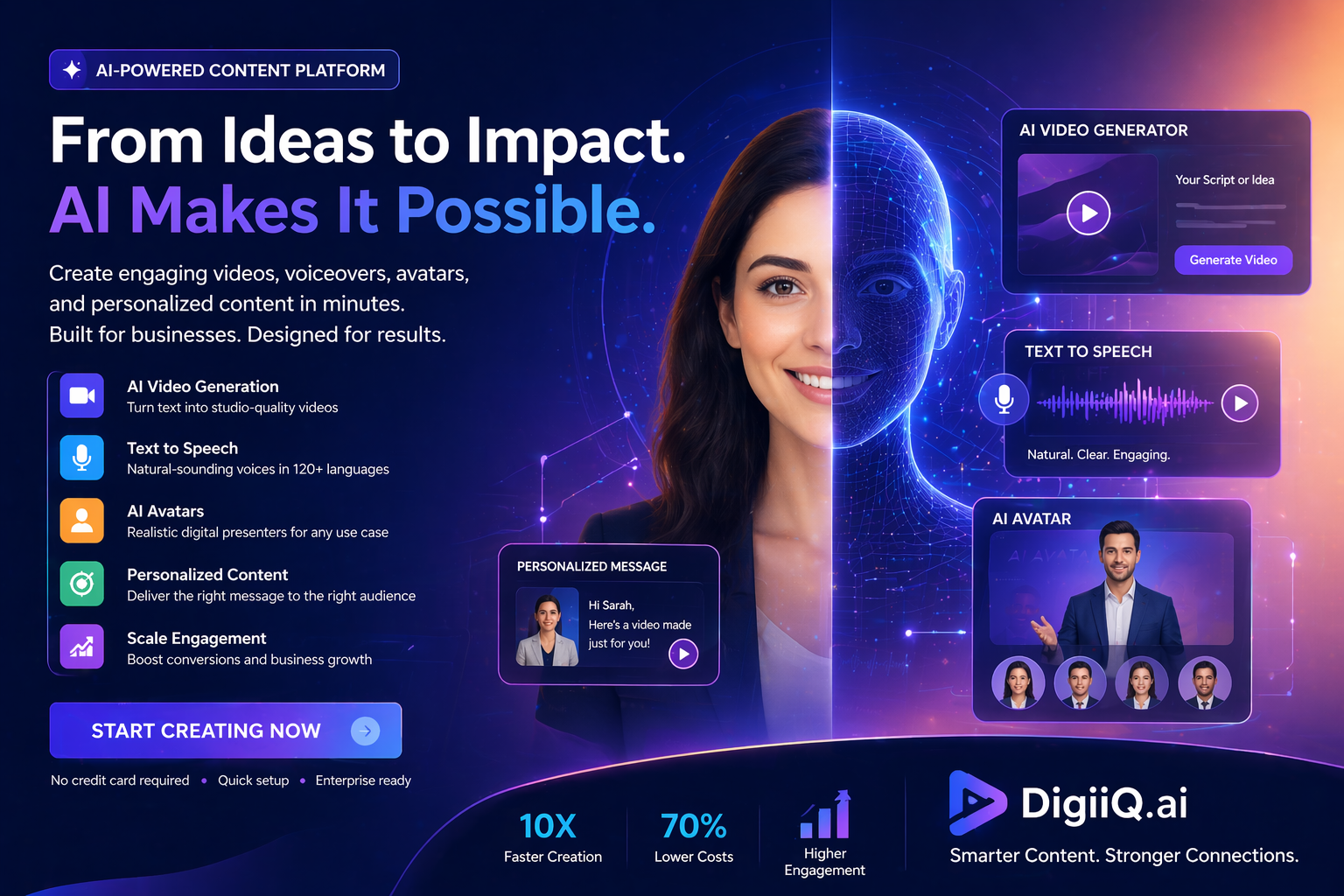
Artificial intelligence is transforming this environment by turning static content into smart, interactive experiences. Platforms like DigiiQ.ai are enabling businesses to move beyond simple content creation and embrace intelligent engagement that drives real results.
The Limitations of Traditional Content Strategies
For many years, businesses relied on static content such as written articles, email campaigns, and basic presentations to communicate with their audience. While these formats served their purpose, they lack the ability to capture attention in today’s fast-paced digital environment.
Static content often fails to engage users because it does not adapt to individual preferences. It delivers the same message to every audience, regardless of their needs or interests. This one-size-fits-all approach leads to lower engagement and missed opportunities.
Additionally, traditional content workflows are slow and resource-intensive. Creating high-quality content requires multiple stages, including research, writing, editing, design, and distribution. These processes can delay campaigns and limit scalability.
AI-powered solutions address these limitations by enabling businesses to create adaptive, engaging, and scalable content that meets modern expectations.
AI Video: Transforming How Businesses Tell Stories
Storytelling is at the heart of effective communication, and video has become the most powerful medium for delivering stories. It combines visuals, audio, and motion to create an immersive experience that resonates with audiences.
However, traditional video production is complex and expensive. It requires planning, filming, editing, and post-production, making it difficult for businesses to produce content consistently.
AI video technology simplifies this process by allowing businesses to generate videos directly from text. This eliminates the need for cameras, studios, and large production teams.
With AI-generated video, companies can create marketing campaigns, product demonstrations, and educational content quickly and efficiently. This enables them to maintain a steady flow of engaging content without the usual production challenges.
Voice Technology: Making Content More Accessible and Human
As digital consumption habits evolve, more users are turning to audio content. Whether it is podcasts, voice assistants, or audio-based learning, voice has become an essential part of the digital experience.
AI-driven voice technology allows businesses to convert written content into natural-sounding speech. This capability enhances accessibility by providing an alternative way for users to consume information.
Voice technology also adds a human element to digital communication. It makes content feel more personal and engaging, improving the overall user experience.
For businesses in the United States, where audiences have diverse preferences and lifestyles, voice-enabled content provides a flexible and effective communication channel.
Personalization: The Key to Meaningful Engagement
Personalization is no longer a luxury; it is a necessity. Customers expect brands to understand their needs and deliver content that is relevant to them.
AI enables businesses to achieve personalisation at scale by analysing data and generating tailored content for different audiences. This allows companies to move beyond generic messaging and create experiences that resonate with individuals.
For example, a business can create personalized video messages for customers, addressing their specific interests and challenges. This approach not only improves engagement but also builds trust and strengthens relationships.
Personalization transforms content from a passive experience into an active interaction, making it more effective and impactful.
AI Avatars: Bridging the Gap Between Digital and Human Interaction
One of the biggest challenges in digital communication is maintaining a human connection. While automation improves efficiency, it can sometimes make interactions feel impersonal.
AI avatars solve this problem by introducing human-like presenters into digital content. These avatars can deliver messages in a natural and engaging way, making communication more relatable.
Businesses can use AI avatars for a variety of purposes, including training, onboarding, customer support, and marketing. They provide a consistent and scalable way to deliver information while maintaining a human touch.
AI avatars also enable multilingual communication, allowing businesses to reach global audiences without additional resources.
Creating a Unified Content Ecosystem
Managing multiple content formats and channels can be challenging for businesses. Different teams often use separate tools for video, audio, design, and distribution, leading to inefficiencies and inconsistencies.
AI-powered platforms bring these processes together into a unified ecosystem. Businesses can create, manage, and distribute content from a single platform, improving collaboration and efficiency.
This integration ensures that all content aligns with the brand’s voice and messaging. It also reduces the time and effort required to manage multiple tools and workflows.
A unified content ecosystem allows businesses to focus on strategy and creativity while AI handles execution.
Driving Efficiency and Reducing Costs
Efficiency is a critical factor for business success, especially in competitive markets like the United States. Traditional content creation methods often require significant investment in resources, tools, and personnel.
AI reduces these costs by automating repetitive tasks and streamlining workflows. Businesses can produce more content with fewer resources, improving their return on investment.
In addition to cost savings, AI improves productivity by reducing the time required for content creation. Teams can focus on high-value activities such as strategy and innovation, rather than manual execution.
The Future of Digital Engagement
The future of digital engagement is being shaped by artificial intelligence. As technology continues to advance, businesses will have access to even more powerful tools for creating and delivering content.
AI will enable real-time content generation, allowing companies to adapt their messaging based on user behaviour. It will also support immersive experiences through advanced video, voice, and interactive technologies.
Businesses that embrace AI will be better positioned to meet the evolving expectations of their audience. They will be able to deliver more engaging, personalised, and impactful experiences.
Conclusion: Building Smarter Experiences with DigiiQ.ai
The shift from static content to smart experiences marks a significant transformation in how businesses communicate. AI is enabling organisations to create dynamic, personalised, and scalable content that drives engagement and growth.
DigiiQ.ai empowers businesses to embrace this transformation by providing tools that convert simple inputs into high-impact digital assets. From video and voice to avatars and personalised content, it offers a comprehensive solution for modern communication needs.
As digital engagement continues to evolve, businesses that leverage AI-driven platforms will be better equipped to succeed. By adopting smarter content strategies, they can connect with their audience more effectively and achieve long-term growth.
Frequently Asked Questions
1. What does AI-driven digital engagement mean for businesses?
AI-driven digital engagement refers to using artificial intelligence to create interactive, personalised, and scalable content experiences such as videos, voice communication, and dynamic messaging.
2. How is AI improving content engagement compared to traditional methods?
AI improves engagement by creating dynamic and personalised content instead of static messaging. It adapts content based on user behaviour, making communication more relevant and effective.
3. Why is video content important in modern digital engagement?
Video content captures attention quickly and simplifies complex information. AI-powered video tools allow businesses to create engaging visual content faster and at scale.
4. How does voice technology enhance user experience?
Voice technology makes content more accessible and interactive by allowing users to listen instead of read. It improves engagement and helps businesses connect with diverse audiences.
5. What role do AI avatars play in digital communication?
AI avatars act as digital presenters that deliver content in a human-like way. They help businesses create engaging and consistent communication for marketing, training, and support.
6. How can DigiiQ.ai help businesses improve digital engagement?
DigiiQ.ai enables businesses to create AI-powered videos, voice content, avatars, and personalized communication, helping them deliver smarter and more engaging digital experiences.