Introduction: Content as a Strategic Business Engine
In today’s digital-first economy, content is no longer a supporting function of business—it is a strategic engine that drives growth, trust, and operational efficiency. Every interaction a business has with customers, employees, partners, and regulators is mediated through content. From marketing campaigns and sales presentations to onboarding materials, compliance updates, and training programs, communication defines how organizations are perceived and how effectively they operate.
However, as organizations scale, the demands placed on content teams grow exponentially. Businesses are expected to produce high-quality content faster, in more formats, across more channels, and in multiple languages—without sacrificing accuracy, brand consistency, or compliance. Traditional content creation models are struggling to keep pace with these expectations.
This is where generative AI marks a fundamental shift. Platforms like DigiiQ.ai are redefining how enterprises create, scale, and localize content by transforming static text into intelligent, visual, and multilingual communication assets. This blog explores the challenges modern enterprises face, the role of generative AI in solving them, and how DigiiQ.ai enables organizations to build scalable, future-ready content ecosystems.
The Enterprise Content Scalability Challenge
Modern enterprises operate in a highly fragmented communication environment. A single message often needs to be adapted for websites, social platforms, email campaigns, sales outreach, internal portals, learning systems, and customer support channels. Each of these touchpoints demands different formats, tones, and levels of detail.
As organizations expand globally, the challenge becomes even more complex. Content must be localized for different languages, regions, and cultural contexts while maintaining a consistent brand voice and regulatory accuracy. Manual workflows—relying on disconnected teams, agencies, and tools—create bottlenecks, inconsistencies, and delays.
This scalability challenge impacts more than productivity. It affects time-to-market, employee alignment, customer trust, and overall business agility. Content teams often spend most of their time repurposing existing materials rather than creating meaningful, high-impact communication. As a result, organizations struggle to respond quickly to market changes or internal transformation initiatives.
Why Generative AI Is a Breakthrough for Enterprises
Generative AI introduces a fundamentally different approach to content creation. Instead of relying on rigid templates or manual production cycles, generative AI systems understand context, intent, and structure. They can produce original content—text, visuals, videos, and avatars—that aligns with defined business objectives and brand standards.
For enterprises, this means:
- Faster content creation and teration
- Reduced dependency on manual production workflows
- Scalable personalization without operational overhead
- Integrated localization from a single source of truth
Importantly, generative AI does not replace human expertise. Instead, it augments human teams by automating repetitive tasks such as formatting, visualization, and adaptation. This allows content professionals to focus on strategy, storytelling, quality control, and governance.
DigiiQ.ai applies generative AI with an enterprise-first mindset—balancing speed and scalability with accuracy, ethics, and control.
From Static Text to Intelligent Visual Communication
Text remains the foundation of most business communication. Policies, scripts, product documentation, training manuals, and presentations all begin as written content. However, long-form text alone is no longer sufficient to capture attention or ensure understanding.
Visual communication—particularly video and AI-powered avatars—has proven to significantly improve engagement, comprehension, and retention. Yet traditional video production is expensive, time-consuming, and difficult to update. Even minor changes often require reshoots, re-edits, and additional approvals.
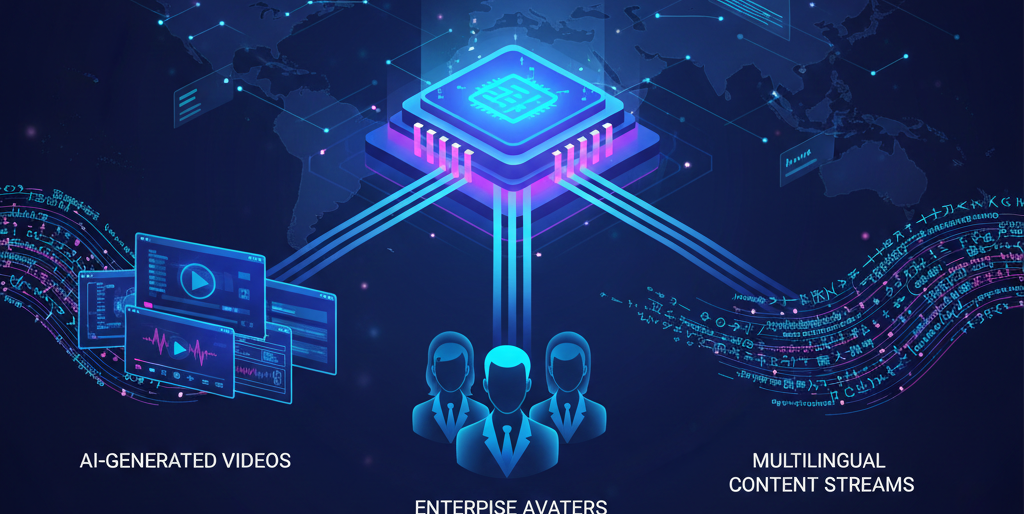
DigiiQ.ai bridges this gap by enabling organizations to convert text into intelligent visual content. A single source document can be transformed into professional videos, avatar-led explanations, or branded visual assets. Updates can be made instantly at the text level, ensuring content remains current without costly rework.
This shift transforms content from a static deliverable into a dynamic, reusable system—one that evolves alongside the business.
Multilingual Localization Without Complexity
Global organizations must communicate in ways that feel local, not translated. Poor localization erodes trust, reduces engagement, and limits adoption—regardless of how strong the original message may be.
Traditional localization processes rely heavily on manual translation, review cycles, and external vendors. These workflows are slow, expensive, and difficult to scale, often forcing businesses to prioritize only a few markets.
With generative AI, localization becomes an integrated part of content creation. DigiiQ.ai enables enterprises to generate multilingual content from a single source while preserving meaning, tone, and brand intent. Localization is no longer a downstream task—it is built into the content lifecycle.
This capability allows organizations to launch campaigns globally, train distributed teams consistently, and communicate with customers in their preferred language—without adding operational complexity.
Personalization at Enterprise Scale
Personalized communication is no longer optional. Customers expect messaging tailored to their industry, role, and context. Employees expect relevant training and updates aligned with their responsibilities. Partners expect clear, targeted information.
Manual personalization does not scale. It introduces inefficiencies, inconsistencies, and governance risks.
Generative AI enables dynamic personalization by adapting content based on audience segments, regions, or use cases—without duplicating effort. DigiiQ.ai allows organizations to deliver personalized experiences while maintaining centralized brand control and approval workflows.
The result is communication that is both relevant and efficient, strengthening engagement across every touchpoint.
Enabling Sales, Training, and Compliance Communication
Sales teams benefit significantly from AI-powered visual communication. Complex products and services are easier to understand when explained through concise videos, avatars, and visual narratives. Personalized sales content builds credibility, shortens sales cycles, and improves conversion rates.
Internally, training and onboarding become more effective when information is presented visually. Employees absorb knowledge faster, retain it longer, and require fewer clarifications. This reduces the burden on HR, IT, and compliance teams.
In regulated industries, clarity is critical. DigiiQ.ai helps organizations present legal and compliance information in accessible, visual formats while maintaining accuracy and oversight. This reduces misinterpretation risks and increases transparency for both internal and external stakeholders.
Supporting the Agentic Workforce of the Future
The future of work includes AI-driven agents that support humans across training, support, and operations. These agentic systems rely on structured, high-quality content to function effectively.
DigiiQ.ai enables organizations to create AI-ready content and avatars that power digital assistants, trainers, and support agents. This ensures consistent guidance, scalable knowledge delivery, and reliable communication across departments and geographies.
By preparing content for both human and AI consumption, DigiiQ.ai helps enterprises build a collaborative workforce where humans and AI operate together seamlessly.
Ethical AI and Enterprise Governance
As generative AI adoption grows, ethical responsibility becomes essential. Enterprises must ensure transparency, data privacy, brand safety, and regulatory compliance in all AI-generated communication.
DigiiQ.ai is built with responsible AI principles at its core. Human-in-the-loop approvals, governance controls, and ethical deployment ensure that AI enhances trust rather than undermines it. Organizations maintain full control over content accuracy, brand alignment, and compliance standards.
Ethical AI is not just a compliance requirement—it is a foundation for sustainable growth and long-term credibility.
Conclusion: Building Future-Ready Content Ecosystems
Content has evolved from a supporting function into a strategic driver of business success. Speed, personalization, clarity, and scalability now define effective communication.
Generative AI represents a paradigm shift in how enterprises create and manage content. DigiiQ.ai empowers organizations to move beyond fragmented workflows and build intelligent, visual, multilingual, and ethical content ecosystems.
By combining generative AI with enterprise governance and human oversight, DigiiQ.ai enables businesses to communicate better, scale faster, and adapt confidently to the future of digital communication.